

The Kanye Loop
A pop culture constant.

Happy Pop Syllabus Friday!
It has been a rather tumultuous few weeks in pop culture, with Ye, the artist formerly known as Kanye West, right at the center.
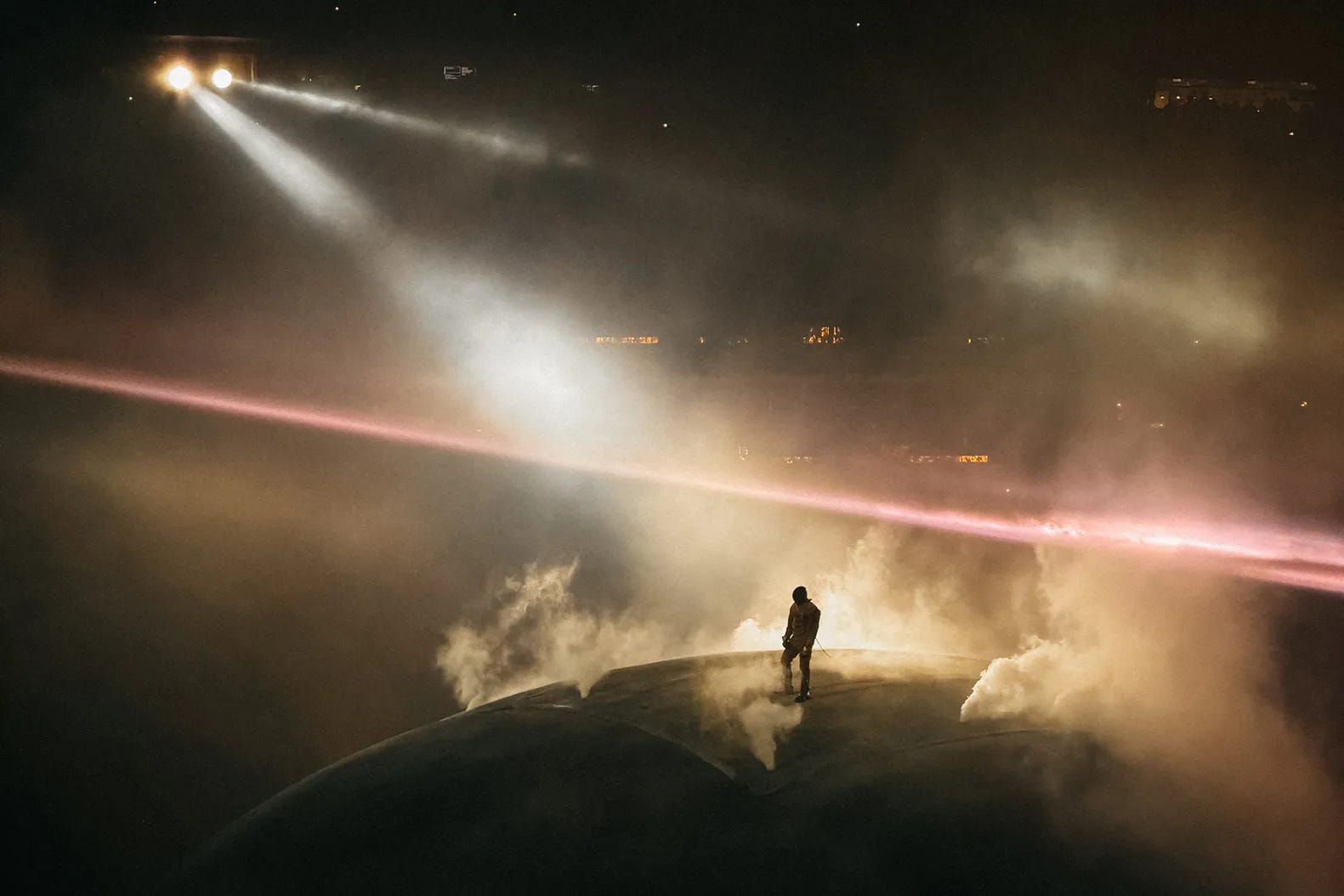
I’ll be candid with you all. I do not enjoy writing or speaking about Kanye. Principally because by doing so, I think I’m doing what Kanye wants. Kanye needs an opponent to thrive. His ego, demons, and the way his talent works (in a purely mechanical sense) require a hostile audience. Without some sort of antagonist, an enraged critic, a doubter, an appalled public to shadow box with, I don’t think Kanye believes he has the tools to create great art.
Kanye needs an enemy, so he creates one. Even if that enemy is himself.
As a result, Kanye—the artist, the man, and the business—is engaged in a constant outrage loop between himself, the public, and the media. This fractal loop has propelled his career, fueled his art, and kept us on this exhausting decades-long train wreck defined by chaos. Despite this chaos, and no matter what line Kanye crosses, whether it’s confessing to an incestuous and abusive relationship with a minor male cousin, stalking and harassing his ex-wife in full view, or open and unashamed bigotry, we, the public, keep engaging with him.
Following Prime Minister Keir Starmer’s recent decision to ban Kanye from entering the UK and the subsequent cancellation of the Wireless festival, the Kanye loop has intensified once more, and his chaos has once again become the biggest pop culture story of the year.
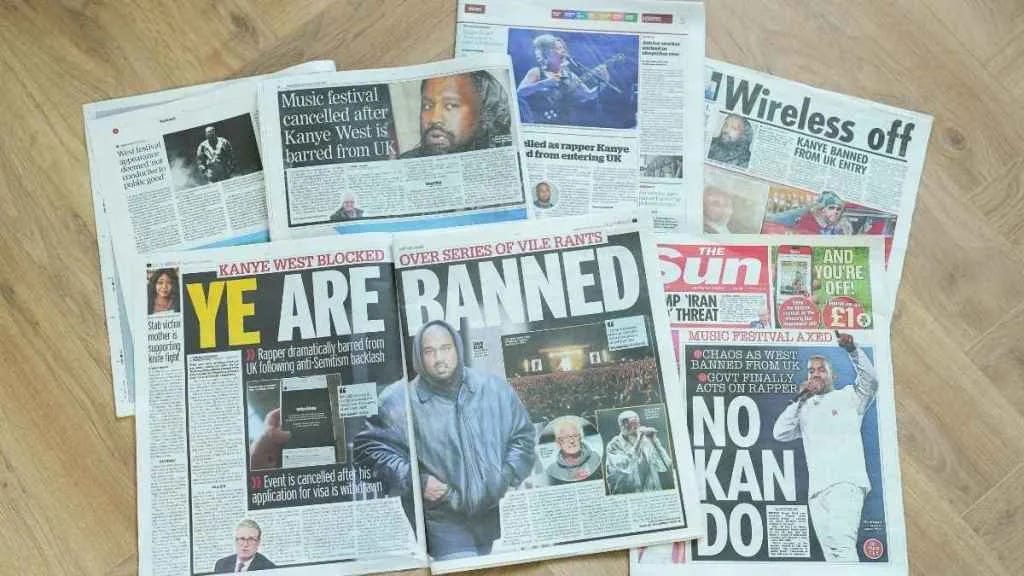
Stripped down to its core, this is an immigration story. It highlights the British Home Office’s legislative overreach, the sheer clumsiness of the incumbent Labor government, and the uneven, arbitrary threshold for who is deemed ineligible to enter the UK due to “unacceptable behavior.”
The Home Office’s history of disproportionately targeting Black male musicians with its travel bans is clear to see. One only has to take a cursory look at the (publicly available) names of the musicians who’ve been prohibited from entering the British Isles, and you’ll spot a pattern. Among the musicians (currently banned, once banned, or detained at an airport), the vast majority are Black men: Jah Cure, Sizzla, Ja Rule, Shyne, Chris Brown, Lil Wayne, TQ, Snoop Dogg, and Busta Rhymes, to name a few.
In 2015, former prime minister and then Home Secretary Theresa May (who ushered in an era of draconian immigration policies) banned Tyler, the Creator, from entering the UK for 3-5 years, alleging his music incited terrorism. This ban was later lifted, but it demonstrates how capricious, and some would argue racist, the British Home Office can be. Especially when you consider that there are men on the banned list who are literal murderous terrorists.
To place Kanye in the lineage of Black artists who have been victims of the Home Office’s institutional bias would be factually correct. But even though it’s factually correct, this beguiling logic obscures a deeper and more complicated truth.
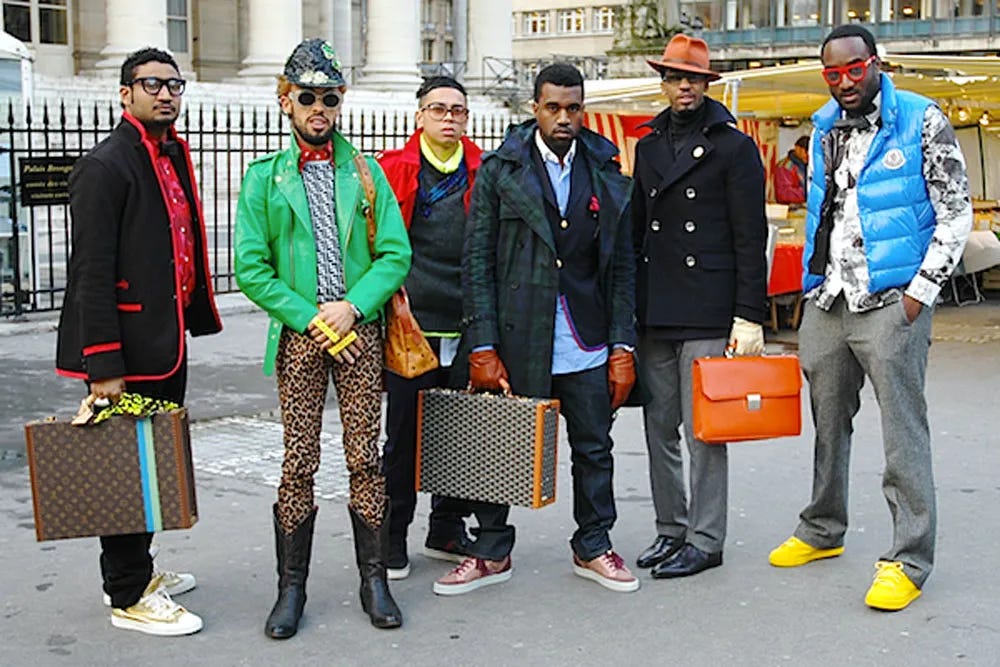
If pop culture is subject to any universal law, Kanye is surely proof of the law of attraction. This is a man who has doggedly and meticulously manufactured his own mythos, and we, the public, haven’t just bought into it; we have helped him manifest and maintain it. A key cornerstone of this mythos is Kanye as the persecuted, underestimated, and overlooked Black man. At Kanye’s most earnest (and lovable), he’s been the budding rapper trapped in the body of a producer; later, he was the fashion designer trapped in the body of a rapper. In moments of mania, he’s compared himself to the risen Christ and dubbed himself Yeezus.
Whatever the case may be, the truth is, the Blackness that led Keir Starmer to pay attention to Kanye is also what has infused Kanye’s myth with deeper meaning and made it more resonant. This resonance is what undergirds Kanye’s fame, wealth, and perceived genius. It has given him a cult-like fanbase, who have acted as a buffer and protective barrier against the consequences of his worst actions. The public’s zone of tolerance for Kanye’s transgressions is far wider than that of any other person, perhaps in pop culture history. In 2021, at a Donda album release party, Kanye made $7 million from merchandise sales at a single show. This was only three short years after Kanye openly proclaimed that “Slavery was a choice”.
Because it’s Kanye, and because of the enduring appeal of the myth he’s created, this travel ban has created a swell of outrage, support, and strange political bedfellows. Nigel Farage, the Brexit instigator and current leader of the Reform Party, has argued that this ban sets a dangerous precedent regarding freedom of speech. In Keir Starmer’s statement underscoring his reasons for banning Kanye, he said his government “will not stop in our fight to confront and defeat the poison of antisemitism”. Some have rightfully queried why Kanye’s anti-Blackness wasn’t cited as a reason for Starmer’s ruling. As a result, this ban has revived a debate about which forms of bigotry are taken more seriously than others, and about whose pain matters. All that to say, that Kanye has somehow managed to get Reform voters and The Shade Borough comment section using the same talking points, which, if you’re familiar with either crowd, you’ll know is nothing short of a miracle.
That being said, the debate around freedom of speech and the Home Office’s immigration policy is the procedural part of this story, and for me, the easiest to parse out. The messier parts are the moral, ethical, and philosophical questions that we are forced to ask ourselves. Has Kanye truly atoned? What does atonement look like? What does punishment look like for Kanye? Who has the authority to punish him? How do we engage with people in pop culture who have caused harm - through words and deeds? And most importantly, who in pop culture gets to be redeemed?
I don’t have the answers to most of these questions, but for the final question: who in pop culture gets to be redeemed? I think we can confidently answer that it’s men like Kanye. If we use the crudest and clearest litmus test for redemption—commercial success—he’s not just been redeemed, he’s been exalted. Just last week, Kanye played two sold-out shows at Sofi Stadium in Los Angeles. A total of 160,000 attendees, and a reported $33 million grossed.
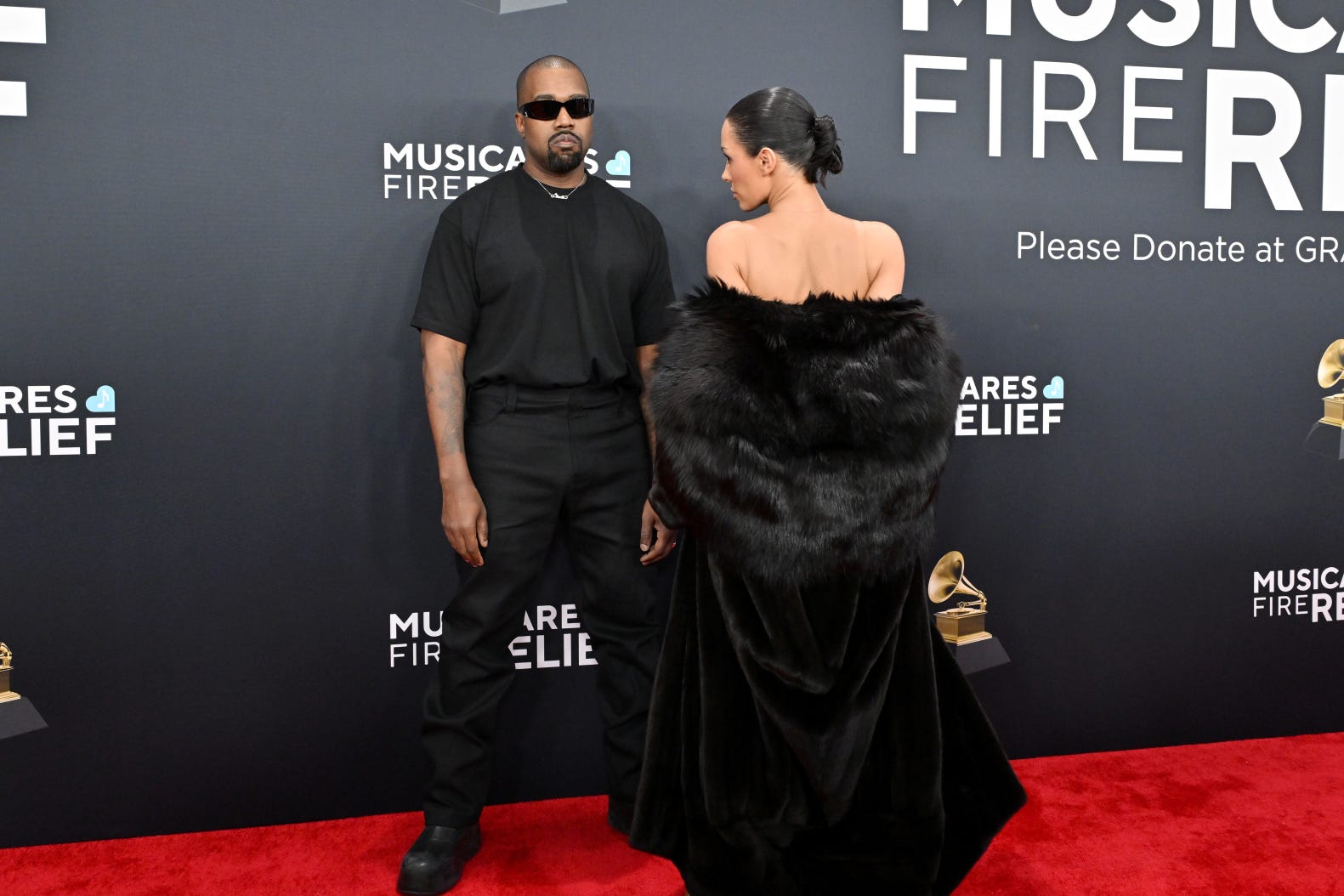
Kanye’s mea culpa, his full-page advertisement and apology in the Wall Street Journal, was published just 10 weeks ago. It was his first formal public apology since releasing the song Heil Hitler in May 2025. In his apology, Kanye cites his traumatic brain injury and an unmanaged Bipolar-1 diagnosis as the primary reasons he was drawn to hate symbols. He claimed to be on a road to recovery through a combination of medication, clean living, and exercise.
The statement ends as follows: “I’m not asking for sympathy or a free pass, though I aspire to earn your forgiveness. I write today simply to ask for your patience and understanding as I find my way home.”
I think the fact that Kanye and his team chose to publish this apology in The Wall Street Journal is telling. It is one of the most-read business and finance news publications in the world. The advertisement wasn’t just about rehabilitating a man’s image; it was also about salvaging a business. Ultimately, Kanye’s comeback as a man and an artist is inextricably bound up in Kanye, the business. There is no real way to prise these three things apart, and the Wall Street Journal apology was a way to create a path of return for all three.
Again, that apology was published a mere 10 weeks ago. 10 weeks doesn’t seem like enough time for Kanye to have found his way home. I still don’t think there’s a way for us to ethically consume his work and music. Kanye has told us and shown us that he is unwell, and while there is no set timeline for healing, 10 weeks feels too brief.
However, the thing about pop culture that makes it so slippery, so difficult to hold, and ultimately so powerful is that you cannot legislate how people feel about an artist. Ultimately, the pop culture consumer market has decided that Kanye - the man, the artist, and the business is one that they believe is worth salvaging and supporting. Kanye may currently be prohibited from entering the UK and Australia, but there are thousands of fans in both these countries who would happily pay to see him. As of writing, BULLY, Kanye’s latest album, is #2 on the Spotify Global Streaming Charts. Has Kanye truly atoned? I don’t know. Whatever the case, the people have decided that Kanye has atoned enough.
If you read this newsletter regularly, you’ll be familiar with the matrix I often use to frame pop culture figures: a star, a celebrity, or a famous person. Kanye is one of those rare people who manages to be all three.
For most pop culture mainstays whom I consider stars, I believe we are drawn to them because of their perceived light. They are there to make us feel good; to be symbols of our highest selves and hopes.
As life is often about duality, there is, of course, another side to this.
The most impactful stars, the ones who reshape political and cultural ecosystems, who define the times, and change the course of history, are often those (mostly men) who know how to build followings by harnessing their darkness. The public loves these men because they do and say what others cannot. Because of their daring and the way they lean into their (and our) darkness, these men are given more room to fail. They are allowed to do the unthinkable, and, in the end, they still get to win. We forgive them time and time again. Or we simply look away.
It’s Kanye. It’s Trump. It’s Diddy. It’s Louis CK. It’s Johnny Depp.
There are too many men to name. They are our Id.
